Research
Why does biodiversity take the forms we observe, and why do traits vary across environments and species? I investigate these questions across broad spatial and taxonomic scales using comparative approaches that integrate biodiversity and environmental datasets, museum collections, and quantitative methods.
Main themes

Constraints in trait diversity
Why do some seemingly viable life forms not exist? I study “gaps” in multidimensional trait spaces to understand how ecological and evolutionary processes shape and constrain phenotypic diversity.
- Bird morphology: Using topological data analysis, we identified a viable but missing body form within a large group of songbirds, likely resulting from niche preemption by early-arriving lineages (Chia et al. 2026).
- Bird feather colors: I’m investigating the occupied and unoccupied regions of bird color space to understand the mechanisms shaping the limits of feather color diversity (ongoing).

Ecological drivers of trait variation
Traits shape how organisms interact with their environments and each other. I study how trait variations across space are shaped by biotic and abiotic pressures.
- Bird nest architectures: By integrating nest traits and environmental variables across global birds, we tested whether dome and cavity nests serve to reduce predation risk or regulate nest microclimate (Chia et al. 2026).
- Moth body size across elevations: Using changes in moth body size composition along an elevational gradient, we investigated how climate influences the relative importance of environmental filtering and niche partitioning in shaping insect assemblages (Chia et al. 2024).
Additional directions

Animal movement and behavior
I contributed to analyses of citizen science occurrence data and GPS-tracked movement data to investigate animal movement behaviors.
- Altitudinal migration of birds: Using eBird data to characterize seasonal elevational movement, we found that the majority of resident birds in Taiwan shift elevation across seasons, likely driven by thermal tolerance and food availability (Tsai et al. 2021).
- Route navigation of carnivores: Analyzing GPS data from over 1,000 individuals across 34 species, we found distinct differences between wild cats and dogs in how they navigate their home ranges (Fagan et al. 2025).

Sustainability and data-driven solutions
I am interested in applying data-driven approaches to sustainability challenges. My projects, both academic and non-academic, have included:
- Food system efficiency: optimizing crop distributions for water savings and yield (ongoing); reducing food waste from foodservice providers by predicting consumption patterns.
- Energy use and urban cooling: analyzing socioeconomic effects on household electricity use; evaluating performances of roof coatings for urban cooling.
Fieldwork, collections, and biodiversity data
Much of my research relies on biodiversity data collected and curated by others. As a heavy user of these resources, I value the effort behind generating them and have contributed to collaborative projects involving fieldwork, museum collections, and digital resources. I hope to continue contributing to these efforts as part of my future research.
- Bird nest trait database: Compiled and standardized global bird nest trait data from literature and online resources for macroecological analyses (Chia et al. 2023).
- Bird morphological traits: Measuring morphological traits from museum specimens as part of collaborative efforts to expand trait datasets (ongoing).
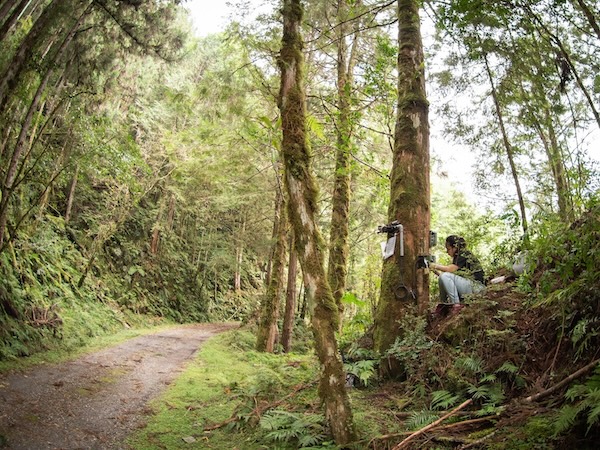
- Soundscape monitoring: Managed ~10 long-term passive acoustic monitoring sites in Taiwanese forests for soundscape studies (Asian Soundscape Monitoring Network).
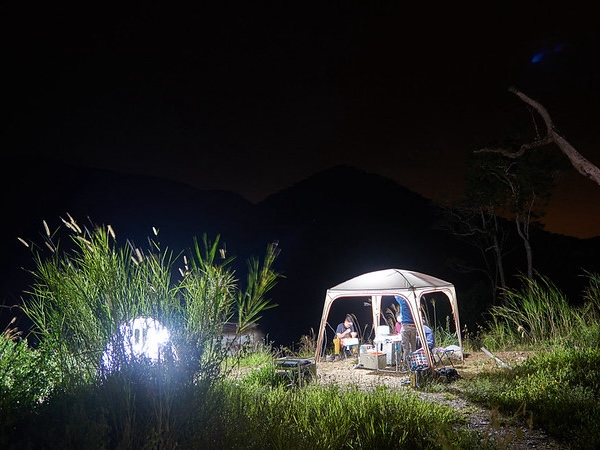
- Moth surveys and experiments: Assisted with collecting moth assemblage data and conducting thermal tolerance experiments along elevational gradients (e.g. Liu et al. 2026).
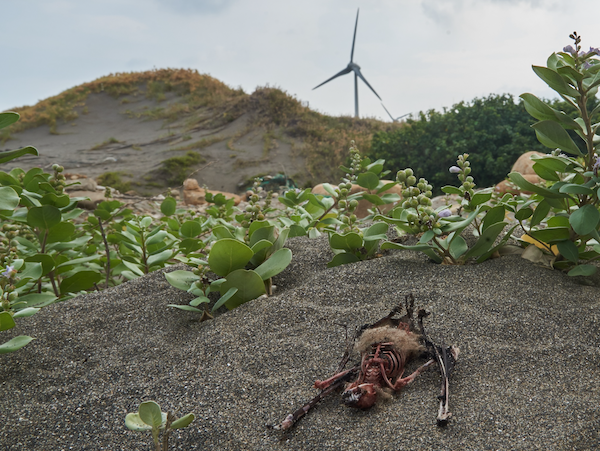
- Bat surveys and experiments: Contributed to surveys of wind turbine-related bat mortality in Taiwan, including carcass searches, mist netting, acoustic monitoring, and scavenger-removal experiments (media).